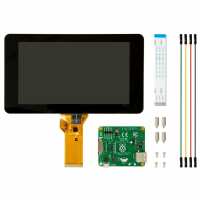
“This screen works well as per the description however setting it up with a Raspberry Pi 4 requires a little effort. Things to watch for
1. Careful when fitting the ribbon cables - ensure these are the tightest particularly the white/grey cable.
2. Make sure the ribbon cable fasteners are clipped in as the cable can come loose
3. use your the official USB-C power supply - that’s all that’s needed.
4. The screen is rotated Started up and the change has to be made in the config files.
5. Set a lower resolution in the config file so that the screen starts up.”
“Nice clear. Relatively easy setup with volumio on my raspberry pi. Had to install extra add on to get keyboard pop up when you want to enter text for searches. That’s a problem with volumio not this screen”
“Excellent quality display (800x480). Crisp and bright. I had some problems with booting (low voltage warnings from the RPi3) so rather than plugging the PSU into the screen and using the connectors to power the Pi, I ended up plugging into the other way round (PSU to Pi and connectors power the display). Some recommend using a PSU "Y" cable and plugging in the screen and RPi3 separately, but I found that unnecessary. Also, it seems fairly well known that the the official screen comes out upside down. You can invert it once booted in the desktop using Preferences\Screen Configuration, or for console uses you can tweak /boot/config.txt by adding "lcd_rotate=2" to the main section. I also found a problem with Raspberry OS where it would sometimes not start the display which was fixed by adding "dtparam=i2c_vc_baudrate=50000" again to /boot/config.txt.
In the end, very happy with the display.”