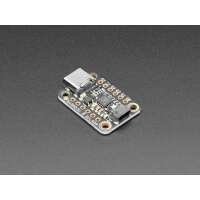
“These Adafruit MCP2221A breakout modules are handy, though they lack a 3V/5V switch. The operating voltage level is set to 3V by default. In order to set the operating voltage to 5V it is necessary to cut a link on the underside and solder a bridge (or 0R SMD resister) to 5V. Hence I bought this second one so that I have one set to 3V and one set to 5V. These can be used with either the Microchip supplied software or Adafruit's Blinka libraries if you prefer Python,”
“The Adafruit MCP2221A Breakout board is a great little board for experimenting with I2C devices. Microchip provides drivers, a DLL, Java Native Interface libraries and utilities. These tools enable the development and testing of I2C devices and interfaces to be performed on a PC prior to porting to an embedded system.”
“This little adapter is super awesome! I've only tested with Stemma QT accessories, but it works really well and it's a lot of fun to use. It takes some steps to get it to work, but everything is well documented on the Adafruit side.”
“I used this to make an orientation sensor for a monitor. With a small python script Windows and Ubuntu rotate their desktop to match the monitor.
The Adafruit is small enough to hot-glue to the back of the monitor and connect with a 15cm USB cable”
“This is a really fun and easy way to do IO/I2C stuff directly from a PC. Highly recommended if you just want to try something out in a full environment.”