“Good sensor for use with Arduino, for visible light with high dynamic range. Tolerates 5v or 3.3v for Vcc so forgiving to people like me who sometimes make mistakes with logic levels! Uses i2c bus to communicate with Arduino and fully supported by Adafruit with a Arduino IDE library. I've used mine to make a light meter for photography and I'm really pleased with it's performance.”
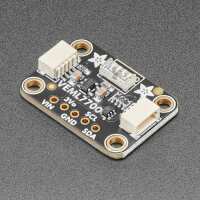
“The image on your website shows the sensor placed in the middle of the board. What you supplied is nothing like it even though the part number on what you supplied is the same. I designed the electronic arrangement around the centrally placed sensor. If you update a product the image should change to match it.”
“Great little sensor, very easy to get working and seems to give good readings. I'm using mine in a pigrow to record the amount of sun my plants are getting on the windowsill and it's working great.”
“Easy to connect up and get communication with the python libraries. Needed to do a bit more digging to find how to adjust gain/integration time on the sensor. As delivered, I found in bright light the sensor was over saturated and reporting the maximum 16-bit value it could report (light value of 65,535, lux of around 3200 with the gain/int_time settings it arrived with). I wrote a function that reads the light value, and then adjust the gain/int_time to make sure the raw value is in the range 7,500-63,000. This gives a dynamic Lux range of about 0.013 to 120,000+, but also with a variable resolution.
Overall a fun little sensor to play with, and nice and cheap too!”