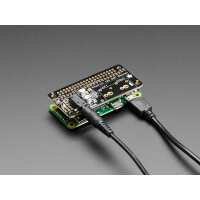
“Great instructions/support for downloading the bits and bobs needed and when set up (quickly and easily) gives much better audio than the RPI audio jack”
“Very impressed with how easy it was to use. Within half an hour I made a gadget with a Pi Zero that starts playing internet radio streams straight from boot.”
“The addition of this bonnet brings 24 bit sound to the Pi's normal audio output. The difference is amazing. Great instructions on YT video called Audio : High Quality Audio using Raspberry Pi by Tech inside with a demonstration of it.”
“tl;dr - Buy it - put the money to a set of speakers to start with.
I had been hunting for a small DAC with line-out for a couple of weeks and was unsure about this (esp for the low low cost) but I am amazed by the value! Sound quality is way above I expected through either my TV soundbar or BOSE speakers with very clear bass and top notes coming over crisp and sharp.
Over the last couple of days I've been moving test files backwards and forward using Volumio on both a PI Zero W (73% CPU use) and a PI 3B (5% use) and I'm convinced I'm not stretching the output yet. CDs and music are currently being handled at 32bit 44.1KHz with ease with the default setting in playback options of Adafruit UDA1334A DAC in DSD mode. Sound control is via the amp rather than Pi - not really an issue for me - you can use software control to give this functionality BUT it auto downsamples.
System probe gives:
Audio info
Hw audio configured: Adafruit UDA1334A
Mixer type: None
Number of channels: 2
Supported sample rate: 44100 48000 88200 96000 176400 192000
and I'm feeding it m4a (Apple lossless) from CD via XLD or direct from iTunes - no problems with AirPlay (IOS 13.3.1) if I want to feed it straight from the iPad but then again with a 1Tb drive connected via USB why would I?
The ONLY drawback I have found is with this being a Pi Zero sized card - it leans on my heatsink as the audio cable drags the front of the board down and due to the display connector and USB chips its hard to put any supports under the board. A traditional issue with smaller boards and larger Pi computers.
I've not explored the pins provided on top of the board by Adafruit as I want this board just as a music player at this time.
If you need me, I'll be away with the Gregorian Chant for awhile :-)”