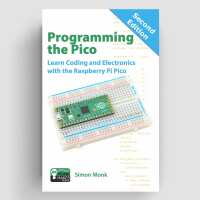
“This book is probably excellent as an introduction to programming, but I am up to speed with several programming languages, (but have not used Micropython) so wanted this as a learning/conversion guide. From that point of view, it is a little superficial.
There seems to be a major omission of loading Micrpython onto the RPI Pico - a topic that is not covered at all. This is possibly not an issue with an unused RPI, but if you already have used it for something else, the steps to load Micropython are not explained! This is a potential 'stumbling block' for a new user who may not be able to reach the 'first base'!
You can download the code for all of the examples in the book, worryingly, the very first example is wrong. It uses the wrong GPIO. Not a very good start for a beginner! I didn't bother with any of the downloads after that.
There are a few typos in the book, but in general, you can live with them.
In summary, a good guide to start learning to program; not as useful as a conversion guide. More attention to proofreading and testing examples would have been useful!”
“arrived promptly, only 4 stars for book as it assumes you know what your doing , could have done with a chapter on setting it up,
Used the PiHut pages to set up so all good and now working through book”
“the book was delivered on time, and was just as excepted, very helpful to someone with no knowledge of the Pico or programming. I am looking forward to working my way through it.”
“Super straightforward and engaging book, short enough to not feel intimidating (I have very little electronics background) but comprehensive enough to get to grips with the pico - I was programming in the first hour! Plus my partner who's a software engineer also thinks it's a decent intro to micropython.”