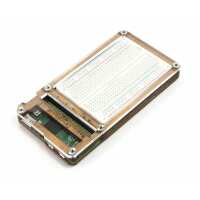
“Nice retro case, however, it would have been better if there were instructions to assemble the various layers of wood. Also, I found the screws to be too short, and very fiddly to put into place. The company should put longer screws into their product!”
“This is a brilliant case for experimenting with. So handy to be able to dedicate a £4 Pi to breadboarding, and the case is really well-designed.
Marked down a star for a few reasons:
• No instructions were included or exist on the manufacturer's site or The Pi Hut (at least at time of writing), so assembly was complete guesswork.
• Previous versions of this case were all-wood, but now there's a perspex top layer which doesn't look quite as nice in my opinion (but is probably stronger, admittedly).
• I had difficulty getting the screws into the nuts, often requiring several attempts to line up the threads so it would screw all the way in and not just seize.
• The mating posts on the edge of the included breadboard make it it a rather tight fit.”
“The wooden case looks very stylish with the pi zero in, though triples the depth profile which is some what disappointing, by reducing the acrylic outer casing by half would have significantly improved the design. The case does allow cables to be trailed out the side using the GPIO which is handy, but expect it to be tight, which is great for my application of using four in a row. If using more it could be an issue. Very satisfied with the case none the less.”
“Easy to use and move around since it's the Pi and breadboard in one! A little piece of the acrylic layer had cracked but I didn't want to ship it back from Sweden but it was almost not visible when put together.”
“The design is awesome and it is well built. It was a fault of my own to not understand how much larger it would become with an integrated breadboard on the case. In hindsight I should have gone for standard Zebra Zero. Just keep that in mind before you buy!”
“It's a very neat way to house a Pi Zero for prototyping - no loose wires holding the breadboard and the Pi together, with the chance of disconnections while moving things around. The layout of the GPIO pins is useful to have on hand, but with it printed on the back there will be times when it's not convenient to read it! Need to position the breadboard, and the CPU heatsink carefully so they don't get in the way of the top cover, so assembling everything first, then sticking them down, is the way to do it. I like this "case" - having a high-tech device housed in wood is quirky, and all together it does a good job.”
“Great looking case with practical benefit of having a built in breadboard for prototyping. I've used female headers on the pi zero coupled with a t-cobbler directly into the female headers which reduces the amount of jumper and ribbon cables needed to get started.”