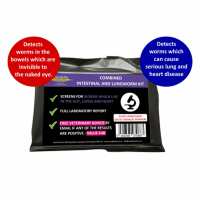
WHY IT IS IMPORTANT TO SCREEN YOUR PET REGULARLY?
1. PARASITIC WORMS ARE A HEALTH THREAT TO PEOPLE AND PETS
Dog and cat worms can CAUSE SERIOUS DISEASES IN HUMANS, including:
blindness
intestinal disturbances
seizures
skin rashes
CHILDREN ARE PARTICULARLY AT RISK of developing health problems as a result of swallowing worm egg or larvae found in soil and the environment (inside and outside the home).
Worms in pets can cause:
diarrhoea
digestive disturbances,
bloating and wind
coughing / severe lung disease
weight loss, poor condition, anaemia and IBD (Inflammatory Bowel Disease)
PUPPIES and KITTENS are commonly affected because many are infected with worms in the womb and shortly after being born.
NOTE: Pets can be infected with worms and not show any signs - particularly in the early stages. Screening helps to prevent significant and sometimes serious damage to the body occurring, as a result of these parasites going undetected for any period of time.
2. TO AVOID UNNECESSARY TOXIC CHEMICALS Worming products contain chemicals designed to kill parasites, which can cause adverse reactions in sensitive pets. This can include ill-effects on the liver, kidneys, bowels, gut flora, nerves and immune system - which is why they are best avoided if possible. Screening is the answer - because there’s no need to worm if none are present.
3. TO CHECK WORM CONTROL MEASURES ARE WORKING Worming regularly is no guarantee that your dog or cat is clear because the worms present may be immune to the products used. Also, many worms are invisible to the naked eye - which means they are not seen even though they are there
The ONLY way to be sure that your pet is worm free, and the control measures in place are working is to SCREEN REGULARLY (adults every 3 - 4 months, kitten and puppies every 3 - 4 weeks).
4. TO HELP STOP THE SPREAD OF DISEASE Some worms can produce 100,000 eggs per day! Each of these can potentially affect a child, adult or other pet. Screening for worms, along with normal hygiene precautions and the responsible collection and disposal of stools, helps to prevent the spread of disease and keep our environment safe.
How do pets pick up these worms?
Roundworms can be contracted by:
larvae crossing the placenta into unborn puppies and kittens
larvae in the mammary glands of the mother being passed to newborn puppies and kittens in the milk
licking or sniffing a stool passed by an infected dog or cat
swallowing rodents, earthworms or birds harbouring the larvae
Tapeworms can be contracted by:
swallowing an infected flea
eating infected rodents, birds, rabbits, hares and sheep
Whipworm can be contracted by:
swallowing infective eggs in the environment
Hookworm can be contracted by:
larvae crossing the placenta into unborn puppies and kittens
larvae in the mammary glands of the mother being passed to newborn puppies and kittens in the milk
licking or sniffing a stool passed by an infected dog or cat
licking / grooming paws which have picked up contaminated soil or stools
larvae burrowing through the skin
Lungworm can be contracted by:
eating slugs, snails, rodents, frogs, birds and other intermediate hosts / carriers)
drinking water, eating grass, chewing on toys etc. contaminated with slug and snail slime
sniffing, licking or eating another dog's or cat's stool
coming into contact with fox poo
Phone:
01565740777
Email:
hello@healthfulpets.co.uk
Location:
12 Dalby Court Gadbrook Business Centre Northwich Cheshire CW9 7TN
Northwich
CW9 7TN