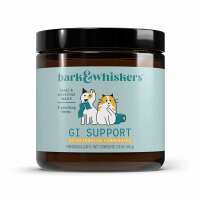
“An Essential for Your Pet’s Emergency First Aid Kit to Support a Healthy Digestive Tract and Normal Bowel Function”
In times of occasional, acute events, Dr Karen Beckers go-to gastrointestinal comfort blend will become an integral part of your first aid kit for your pet’s digestive distress. If you own a dog or cat, I don’t have to tell you how frustrating it is to come home only to discover your pet has soiled or thrown up on your favourite rug or chair...
The reality is, dogs and cats occasionally have loose stools or get sick to their stomachs, just like us humans. Whereas cats are more inclined to throw up, dogs tend to display their digestive distress through loose stools and straining to go. Either way, when you have a pet, it’s just something you have to expect.
Occasional digestive distress can result from many different things:
Dietary indiscretion or eating something they shouldn’t
A sudden change in diet
Food allergies or sensitivities
Stress from a change in your pet’s environment, such as travel, boarding, house guests or a new family pet
Trauma from visiting the veterinarian or groomer
Foreign gastrointestinal invaders
Disease and inflammation
Dietary indiscretion is by far the most common reason for loose stools in dogs. They’re just his body’s way of getting rid of the unwanted substance as quickly as possible.
Feeding your pet the same food each day and then suddenly switching to a new diet can also cause digestive distress. Her gut has been conditioned to process only one type of food, which isn’t good for her physically or nutritionally. That’s why Dr Karen Becker recommends feeding a variety of foods; it helps make her digestive system more resilient.
Why Digestive Distress Should Never Be Ignored
Don't ignore digestive distress in your dog or cat as it may be signaling a serious issue. If there’s one message I need to share, it’s this: Digestive distress must always be taken seriously.
For healthy adult animals, a single bout of loose stools or vomiting may not be a reason for concern, especially if your pet seems fine afterward. However, with older, smaller or debilitated pets, it can be a different story...
Just one episode of loose stools or vomiting can raise your dog’s or cat’s risk for dehydration. It’s important to carefully observe your pet afterward for any signs of distress. What if your pet has more than one episode? If your pet’s loose stools or vomiting lasts more than a day, I recommend calling your integrative veterinarian. Get help immediately if your dog or cat passes blood in his stool or if you notice any weakness or other signs of debilitation.
If your dog or cat appears healthy and not in distress, try a short-term fast (not for puppies or kittens under three pounds) to help her gastrointestinal tract rest and rejuvenate. Withhold food for 12 hours, but provide fresh, clean water. Following up with a bland diet of fat-free ground turkey and plain canned pumpkin usually leads to a rapid recovery.
Digestive distress is a common occurrence and is something Dr Karen Becker sees regularly in my practice. In addition to the above feeding advice that she gives to her patients’ owners, she also recommend using a soothing, comforting blend that was created 21 years ago...
A “Must” for Every Pet Owner’s Emergency First Aid Kit
Before telling you about Dr Karen Beckers GI Support for Cats and Dogs, let's see what it’s not intended for...
It should never take the place of a complete diagnosis by your vet
It’s not a replacement for a poor diet or too rich of food
It’s not intended for food allergies
The underlying reasons for your pet’s loose stools or vomiting are important to know. You must rule out any. And only your trusted vet can do that.
Dr Mercola's GI Support for Cats and Dogs is designed for use during occasional, acute gastrointestinal events. GI Support for Cats and Dogs is a unique blend of nine ingredients, including herbs that have been used for many years for both humans and animals.
One thing’s for certain: You won’t find a blend exactly like it anywhere else. It’s Dr Karen Beckers own carefully developed formula. I’m especially thankful to Dr. Mercola for putting all of my favorite go-to herbs in one, easy-to-administer formula.
Let’s take a closer look at each of the ingredients, starting with an herb that has long been Dr Karen Beckers favorite for GI distress...
This Inner Bark’s Lubricating Qualities Soothe and Support Normal Bowel Function
Slippery elm is prepared from the inner bark of the slippery or red elm tree, or Ulmus rubra. When slippery elm mixes with your pet’s stomach digestive juices, it forms a viscus or “slippery” gel that coats and soothes mucus membranes lining your pet’s gastrointestinal tract.
Dried powder extracts with their tannins and oily mucilage components offer the best lubrication.
This remarkable herb can help your cat’s or dog’s normal bowel and GI function and occasional constipation or loose stools.
It’s important to know and trust the manufacturer of any slippery elm supplement. Only the inner bark of the slippery elm tree has mucilagenic, soothing properties, and that’s what is used in this formula.
While slippery elm has been studied in humans, no animal studies exist. Because its effects are generally mild, Dr Karen Becker feels comfortable using it with her pet patients.
One of the Oldest, Most Widely Used Plants in the World – Proven to Calm and Settle Stomachs
A member of the daisy family, chamomile comes from the dried flowers of the Matricaria species. Chamomile is one of the oldest, most widely used plants in the world. Used as a traditional herb for thousands of years to help settle stomachs and for its calming effects, it’s best known as an herbal tea.
About 120 metabolites have been identified in chamomile, including 28 terpenoids and 36 flavonoids. Its calming effects come from an antioxidant called apigenin, which actually binds to specific receptors in your pet’s brain.
Chamomile is considered one of the safest and most useful herbal pet remedies known today.
Beyond its overall calming effects, chamomile is also known for the following attributes:
Supports the digestive process
Helps calm occasional stomach upset due to excitability
Helps relieve occasional gas, cramping and discomfort
Supports an already normal inflammatory response in the gut
Used by Humans Since Antiquity, Fennel Seed Offers Much More Than Just Flavour
A popular plant often found in home gardens, fennel, or Foeniculum vulgare, originated in the southern Mediterranean region. The herb was well known to the ancient Romans, Egyptians, Indians and Chinese. The Romans grew it specially for its fragrant seeds. Even Emperor Charlemagne reportedly encouraged its cultivation throughout Central Europe.
Fennel seed contains a unique combination of phytonutrients, including the flavonoids rutin, quercetin and glycoside antioxidants for the support of your pet gastrointestinal tract.
F. vulgare has been extensively used in traditional medicine for many years. I routinely use fennel seed for:
Supporting a pet’s digestive processes.
Reducing occasional gas and gastrointestinal discomfort.
Calming the GI tract.
Fennel also helps increase appetite – a bonus for pets who don’t want to eat. Plus, it even helps freshen doggy breath!
Inside the Aloe Vera Leaf – a Plethora of Goodness for Your Pet’s Healthy Digestive Tract
The aloe vera plant is a member of the succulent family, originating from North Africa.
In its true whole leaf form, aloe can be toxic to cats and dogs. The outer portion of the leaf contains a substance called aloin or latex which can cause GI upset and laxative effects. A high-quality aloe vera supplement intended for pets won’t contain any of the outer portion.
The inner portion of the aloe vera leaf is a whole different story... Aloe vera is considered a superfood, courtesy of its rich supply of phytonutrients and polysaccharides, which support your pet’s immune function and already normal inflammatory response.
The gel inside the aloe vera leaf also contains many important vitamins, minerals, amino acids and enzymes to support overall health, muscle building and digestive health.
For hundreds of years, aloe vera has been used for digestive distress and more. It has been shown to support healthy normal gastrointestinal motility and mucus secretion in the colon.
Licorice Root, or DGL, Supports a Healthy Mucosal Barrier in Your Pet’s GI Tract
Licorice root has been used for thousands of years in Eastern medicine for its soothing properties. Its use with animals is probably as ancient as it is with humans.
In China, licorice is used more than any other herb, including ginseng! Dr Karen Becker especially likes licorice root when she have a patient showing signs of digestive distress, such as cramping, bloating, gas and loose stools. Unfortunately, licorice also contains compounds that can increase blood pressure, such as glycerrhizinic and glycerrhetinic acids. To avoid blood pressure issues, these components must be removed.
Deglycyrrhizinated licorice (DGL) is a licorice extract that doesn’t contain these blood pressure-raising compounds.
Research shows that DGL:
Supports a healthy mucosal barrier in the GI tract.
Helps soothe digestive distress.
Supports adrenal function and an already normal inflammatory response.
Forget the Vegetable, Its Leaves Offer Even More Potential Health Benefits
Artichoke, or Cynara cardunculus, is a perennial plant native to the Mediterranean region. The most active compounds are found in the artichoke leaf.
Here are some of the most valuable compounds in artichoke leaf extract:
Caffeoylquinic acid – an antioxidant that helps support normal detoxification
Luteolin – an antioxidant that supports an already normal inflammatory response
Cynarin – another antioxidant that supports healthy bile production to aid in the digestion of fats
Inulin – a prebiotic that promotes the growth of beneficial microorganisms in the gut
Researchers have found that artichoke leaf extracts offer more potential health benefits than the artichoke itself.
Studies show that the use of artichoke leaf extract helps reduce occasional gastrointestinal symptoms, supports a balanced intestinal microbiota and helps ease spasms in the GI tract.
Found in Several Different Plants, This Yellow Alkaloid Supports GI Function and Bowel Health
Berberine has long played an important role in Traditional Chinese and Ayurvedic medicine. It’s a yellow plant alkaloid that naturally occurs in several plant species, including Coptis sp. and Berberis sp.
You can find berberine in goldenseal, Oregon grape and barberry. The berberine alkaloid is found in the plants’ roots, rhizomes and stem bark.
Recent studies show berberine has significant biological effects on gastrointestinal function and may hold value for supporting normal bowel health in cats and dogs.
Here are some of the observed effects of berberine:
Influences gut bacteria, promoting beneficial strains such as short-chain fatty acids
Supports intestinal health and a healthy gut mucosa
Supports an already normal inflammatory response
How a Stunning State Flower Can Provide Comfort to Your Pet During Times of Occasional Digestive Distress
The state flower of Oregon, Oregon grape is an evergreen shrub with leaves resembling holly and berries that look like clusters of grapes. It’s native to much of the Pacific coast. This yellow-flowering beauty is related to barberry and contains high levels of berberine.
Oregon grape root has been attributed with the following properties for GI support:
Calms and soothes the smooth muscles lining the digestive tract
Supports the normal flow of bile for normal waste removal and bowel function
Supports the proper digestion of fats and proteins
Peppermint – The Old Standby for an Upset Stomach
If you’ve ever personally experienced digestive distress, there’s a good chance you’ve reached for a cup of peppermint leaf tea or a peppermint oil capsule. Peppermint has been used for centuries as a digestive aid. An aromatic herb in the mint family, its leaves contain phenolic compounds, including rosmarinic acid and flavonoids such as luteolin and hesperidin. This herb’s leaves also contain essential oils, including menthol, menthone and limonene.
Animal studies show peppermint relaxes your digestive system and provides abdominal comfort, courtesy of its menthol. It helps prevent the smooth muscles in the gut from contracting, which helps relieve spasms.
Peppermint may also help relieve digestive symptoms such as occasional gas, bloating and indigestion.
Could GI Support for Cats and Dogs Help Your Pet Through Times of Occasional Loose Stools, Constipation and Vomiting?
Dr Karen Beckers unique formula has helped many of my patients over the years, and I believe it might help yours, too.
Here’s a complete list of what you’ll find in GI Support for Cats and Dogs:
Slippery Elm Bark
Organic Chamomile Flower
Organic Fennel Seed
Organic Aloe Vera Leaf (the inner leaf portion only)
Deglycyrrhizinated Licorice [Glycyrrhiza] Root Extract
Artichoke [Cynara cardunculus] Leaf Extract
Berberine HCl [from Berberis aristata (Bark)]
Oregon Grape Root (contains berberine)
Peppermint Leaf
When your pet experiences occasional digestive distress, he looks to you for effective relief. With GI Support for Cats and Dogs, you have a tool that can help make those tough days a bit easier?
Why not add it to your pet’s emergency first aid kit or keep handy on your shelf for when you need it. Dr Karen Becker emphasises, with dogs and cats, it’s not if, but when.
Phone:
01565740777
Email:
hello@healthfulpets.co.uk
Location:
12 Dalby Court Gadbrook Business Centre Northwich Cheshire CW9 7TN
Northwich
CW9 7TN