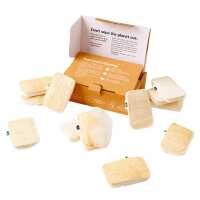
“I was sceptical on ordering these, but I have been pleasantly surprised, very impressed, they clean pots well & the scrub side is marvellous, very happy with them”
“OK -ish - it's a slice of natural Loofah, normally used as an exfoliant for our skin, stuck to some kind of sponge. Neither side scours a pan, so wire scourers are needed. Some are thicker than others and the thick one did not bend around bowls and pots. All in all, I think their best use is for cleaning household surfaces you don't want to scratch/mark such as kitchen cabinets and painted surfaces.”
Thank you for trying our sponge scourers.
The cellulose part of our sponge is made from wood pulp, which comes from FSC/PEFC certified sources, and the top is from a loofah, which is a species of tropical and subtropical vines in the gourd family. Then it is stitched on with a natural cotton thread. So all the materials are natural that we use for them. They can be harder to work with, and they do go through quality control.
Loofah fibres are naturally coarse and have good scrubbing power, yet are gentle enough for non-scratch pans. If you require more heavy-duty cleaning, we suggest our copper scourers or washing-up brush
“Plastic free is great. However, I find the scourers quite stiff even when wet and I am concerned they
do not dry out before the next use. They take a day to dry. I understood germs breed in wet cloths
so I am unsure if I should continue to use them, even though I bought a year's supply.”
We are delighted that you have given our scourers a try and like the idea behind them.
The sponge scourers need to be dried out before they can be packaged and dispatched to customers. Rinse under water and give them a little massage before use to soften up The sponges will become softer upon continued use with washing up liquid. They will also soften up with usage, so the longer you use it, the softer and more malleable it gets. You can speed this up by popping it into the washing machine or dishwasher a few times.
To keep them fresh, just pop them in the washing machine.
“I bought the “one-year supply” on sale, and I don’t regret it. I’ve been giving some sponges away to get more people on board, in case they like them. The only problem for me is that the scouring side doesn’t clean well enough and is a bit too rigid, so it takes me longer to do the washing up. I use the sponge side only on pans, so ideally, the scouring side should be more effective and flexible. I’m not sure if I’ll buy them again or if I’ll combine these with plastic ones unless I find other ecological alternatives, but I need something that cleans more effectively.”
Thank you so much for trying our sponge scourers and liking the idea behind them.
The sponge scourers need to be dried out before they can be packaged and dispatched to customers. Rinse them under water and give them a little massage before use to soften up. The sponges will become softer upon continued use with washing-up liquid. They will also soften up with usage, so the longer you use it, the softer and more malleable it gets. You can speed this up by popping it into the washing machine or dishwasher a few times.
You might like to try our pop-up sponges.
“Excellent quality and reassuring to know these won't contribute to the alarming amount of micro plastics in our seas and rivers. Clear these are going to be very long lasting. Very effective at the washing up bowl, far superior to cheap shop bought scrubbing pads.”